
Blessings in Shadowdark: When the Gods Give You a Hand
New Blessing List: Because Who Doesn’t Love Free Power?

One of the most underrated yet incredibly valuable aspects of Shadowdark is the concept of Boons. According to the manual, Boons are "non-monetary sources of value or benefit." In other words, they’re not something you can sell for gold pieces (sorry, no quick cash here), but they still offer some kind of advantage or perk. Among these, Blessings are the ones that really caught my eye. Essentially, a Blessing is a magical gift from some powerful entity—be it good, evil, or just really bored—or something you might obtain through a ritual or by contacting a non-physical being.
When I first read about Blessings in Shadowdark, I was so intrigued that I immediately wanted to use them. And let me tell you, they’re a lot of fun. But after playing around with them for a while, I realized they could use a few tweaks. First off (especially for solo play), we need some context about the entity granting the Blessing. This helps tie it into your character’s story in a meaningful way. Second, some of the official Blessings created by Kelsey (the brilliant mind behind Shadowdark) feel a tad overpowered. For example, Shune’s Mark and Rite of Rage are two that I found particularly unbalanced. The main issue is that most Blessings last indefinitely (except for Nine Lives), which can make them feel a bit too strong. To fix this, I suggest adding a maximum duration to keep things in check.
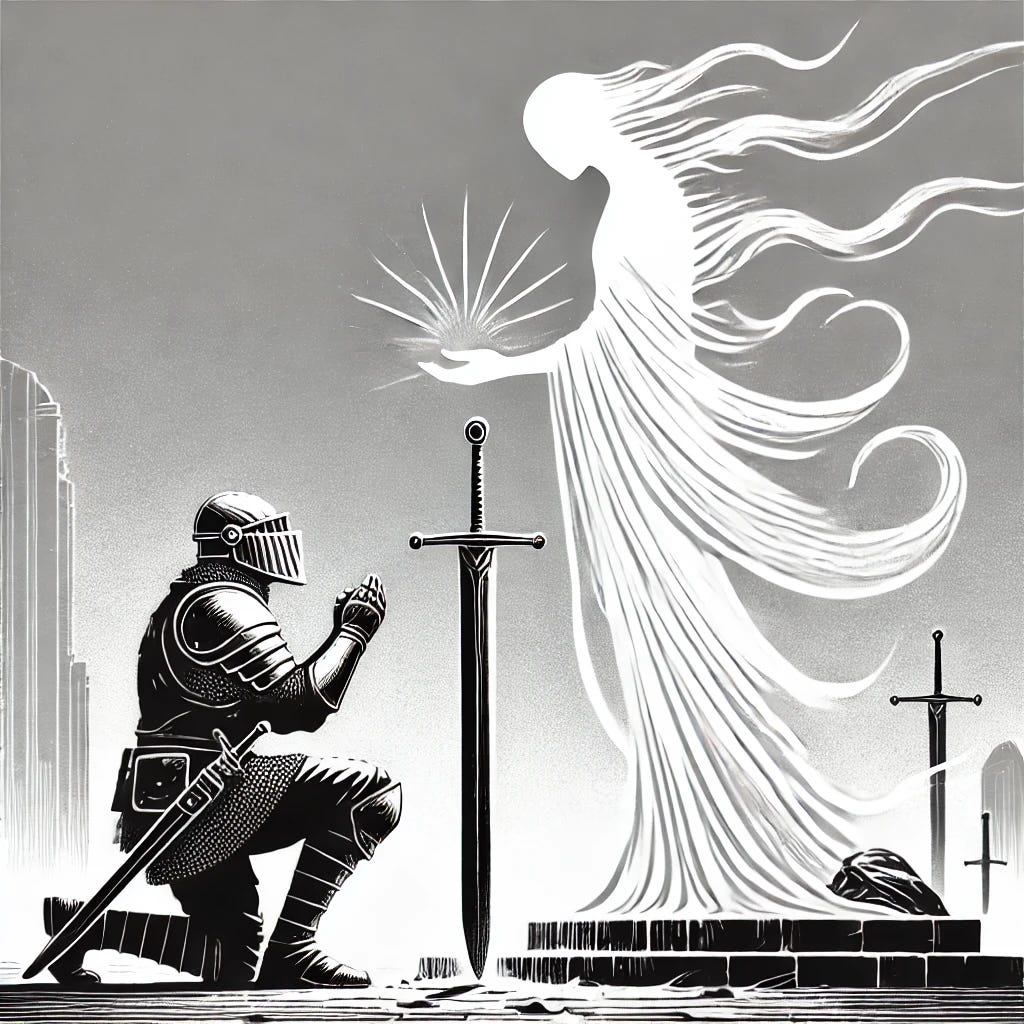
To spice things up, I’ve created a few new Blessings of my own, along with some tables for duration and origin. The duration table adds a random time limit to the Blessing, while the origin table provides inspiration for tying the Blessing into your campaign. Let’s dive in!
Blessing List: Because Who Doesn’t Love Free Power?
Grasshopper Leap: 1/combat, you can jump near vertically or horizontally without it counting as your movement for the turn.
Perfect for when you need to make a dramatic exit—or entrance.Gambit’s Luck: 1/day, when you roll a 19, you can treat it as a 20 (critical success).
Because sometimes, you just need the dice gods to cut you some slack.Uther’s Illumination: 1/combat, when an enemy successfully hits you, you can force them to reroll their attack.
“Nope, try again.”Scholar’s View: 1/combat, you gain advantage on a spellcasting roll.
For when you absolutely, positively need that fireball to land.Dark Body Aura: Whenever you take 3 or more damage, the attacker takes 1 damage.
Hurt me, and you’ll feel it too. Petty? Maybe. Effective? Absolutely.The Joker’s Game: 1/day, when you take damage, you can make a DC 14 CHA check. On success, you take no damage, and the attacker takes it instead. On failure, you take double damage.
High risk, high reward. Just like gambling, but with more swords.Bloodthirst: 3/day, when you deal damage to a creature, you heal 1d4 HP.
Vampire vibes, but without the whole “drinking blood” thing.Angel’s Touch: 1/day, when an ally is hit by an attack that would reduce them to 0 HP, if you’re within near distance and have more than 1 HP, you can reduce them to 1 HP instead, but you drop to 1 HP too.
The ultimate “take one for the team” move.Hercules’ Blessing: While active, you gain +2 STR.
For when you need to flex on your enemies—literally.Legolas’ Eye: Whenever you successfully hit with a ranged weapon (bows, blowguns, etc.), add 1 to the damage roll.
Because Legolas made it look cool, and now you can too.Phantasmal Blade: 1/combat, when you deal slashing damage to a creature (with swords, daggers or any blade weapon), they must make a DC 14 CON save or take 1 damage at the start of each turn for the rest of the combat.
Bleed damage, baby. It’s the gift that keeps on giving.Lucky Hand: Whenever you gain or spend a Luck point, you can roll 1d20:
1: Lose 2 extra Luck points (if you have them).
2-9: Lose 1 extra Luck point (if you have it).
10-19: Gain 1 extra Luck point.
20: Gain 2 extra Luck points.
Luck is a fickle mistress, but she’s got your back… sometimes.
Master of Keys: 1/day, you can magically unlock something that’s locked.
Who needs a rogue when you’ve got magic?Serpent’s Tongue: 1/day, you can understand a language you don’t know (maximum one phrase).
Great for eavesdropping or ordering food in exotic lands.Fish Sense: You can sense the direction of the nearest water source.
For when you’re lost in the desert and really, really thirsty.Loki’s Sense: You can sense any living creature of Chaotic alignment within near distance.
Chaos is your radar now. Use it wisely.Deity’s Child: If you have a deity, you can pray for 30 minutes to heal 1d6 HP.
Divine healthcare, coming right up.The Illusionist Crow: 1/combat, you can move to near distance by transforming into a swarm of crows, allowing you to hide (if there’s a suitable hiding spot).
Edgy, dramatic, and perfect for a quick escape.Darah’s Skin: 1/day, if someone grabs or restrains you (need to have body to body contact), you can take 1d4 damage to deal 1d8 damage to them.
“Let go of me, or I’ll make it hurt.”Sakashima’s Vision: 1/day in combat, make a DC 12 INT check. On a success, you can attempt to cast a spell you don’t know that was cast during the combat. (You must make the appropriate casting check and suffer penalties on a critical miss.)
“I saw you do that cool thing. Let me try it.”
Duration Table: Because Even Divine Favor Has an Expiration Date
Roll 1d6 to determine how long a Blessing lasts (minimum of one day, because let’s be real, anything shorter is just a tease):
1 Day: The Blessing lasts exactly 24 hours. Use it wisely—tomorrow, you’re back to being mortal.
3 Days: A solid weekend of divine power. Perfect for a short dungeon delve or a quick quest.
1 Week: The Blessing sticks around for seven days. Just enough time to feel invincible before reality sets in.
Until the Next Full Moon: The Blessing fades when the moon completes its cycle. Great for werewolf hunters or lunar enthusiasts.
1 Month: A full month of divine favor. By the end, you’ll either miss it or be relieved it’s over.
Until the Next Solstice: The Blessing lasts until the seasons change. Ideal for long-term campaigns or players who love a ticking clock.
This way, the Blessings feel impactful but still have a clear endpoint, keeping the game balanced and giving players a reason to savor their newfound power. And hey, if they roll a 1, at least they get a full day to feel like a demigod before returning to their humble adventurer roots.
Origin Table: Who’s Giving You This Power, Anyway?
Roll 1d10 to determine the source of your Blessing:
A benevolent deity who thinks you’re their favorite.
A mischievous trickster god who’s testing you.
A vengeful spirit seeking redemption through you.
An ancient artifact you accidentally activated.
A pact with a demon who’s definitely not going to betray you later.
A celestial being who’s bored and decided to meddle.
A forgotten ancestor who’s watching over you.
A powerful wizard who’s using you as a test subject.
A sentient magical creature who’s taken a liking to you.
A cosmic force that’s chosen you for reasons unknown.
Final Thoughts: Blessings Are a Blessing (Mostly)
Blessings are one of the coolest, most underutilized aspects of Shadowdark. They add depth, flavor, and a touch of divine (or demonic) intervention to your game. Sure, some of them might need a little balancing, but with the right tweaks, they can become a cornerstone of your campaign. So, go forth, adventurer, and may the gods—or whoever’s handing out these Blessings—smile upon you. Just don’t forget to keep an eye on that duration timer. After all, even divine favor has an expiration date. Until next time, and remember, keep your blades sharp and your shields up!
-Mirokus (Codex Gigas)
This is some really cool stuff! Love it!